


 中文简体
中文简体 English
 русский
 Español
 عربى
عربى
Home / News / Industry News / Latex-Paint Wallcovering vs. Traditional Coatings: An Engineering & Performance Analysis
Industry News
For over a century, liquid-applied coatings have served as the industry benchmark for commercial and residential interior wall finishes. Standard architectural latex paints, site-applied Venetian plasters, and multi-layer decorative texture coatings rely heavily on manual application techniques, multi-step drying cycles, and pristine ambient environmental conditions. However, the physical reality of building movement, substrate outgassing, ambient humidity fluctuations, and shrinking construction timelines has increasingly highlighted the mechanical limitations of field-applied liquid films.
The emergence of pre-finished water-based latex-paint wallcovering (latex-paint wallcovering) represents a fundamental shift in surface coating engineering. Rather than synthesizing a protective and aesthetic paint layer directly on an imperfect, settling gypsum wall onsite, this technology pre-fabricates an integrated composite roll under precise factory parameters. By molecularly bonding high-solid water-based acrylic/latex resins and inert mineral matrix fillers onto an engineered non-woven textile substrate, this material decouples surface finish quality from job-site environmental variables.
To understand why specification preferences are shifting in high-traffic commercial, hospitality, healthcare, and premium residential sectors, architectural engineers must evaluate the fundamental material science distinctions separating site-cured liquid paints from pre-engineered wallcovering composites.
Formed via in-situ solvent or water evaporation directly on site. The resulting film thickness varies with manual application, possesses negligible tensile strength, and directly inherits all shear stress and cracking from the underlying wall substrate.
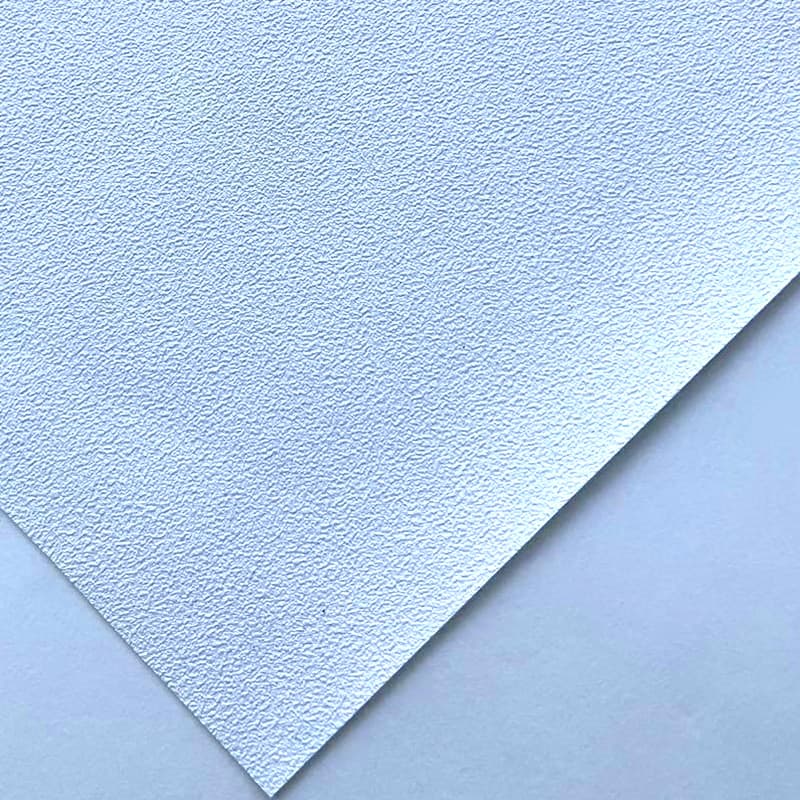
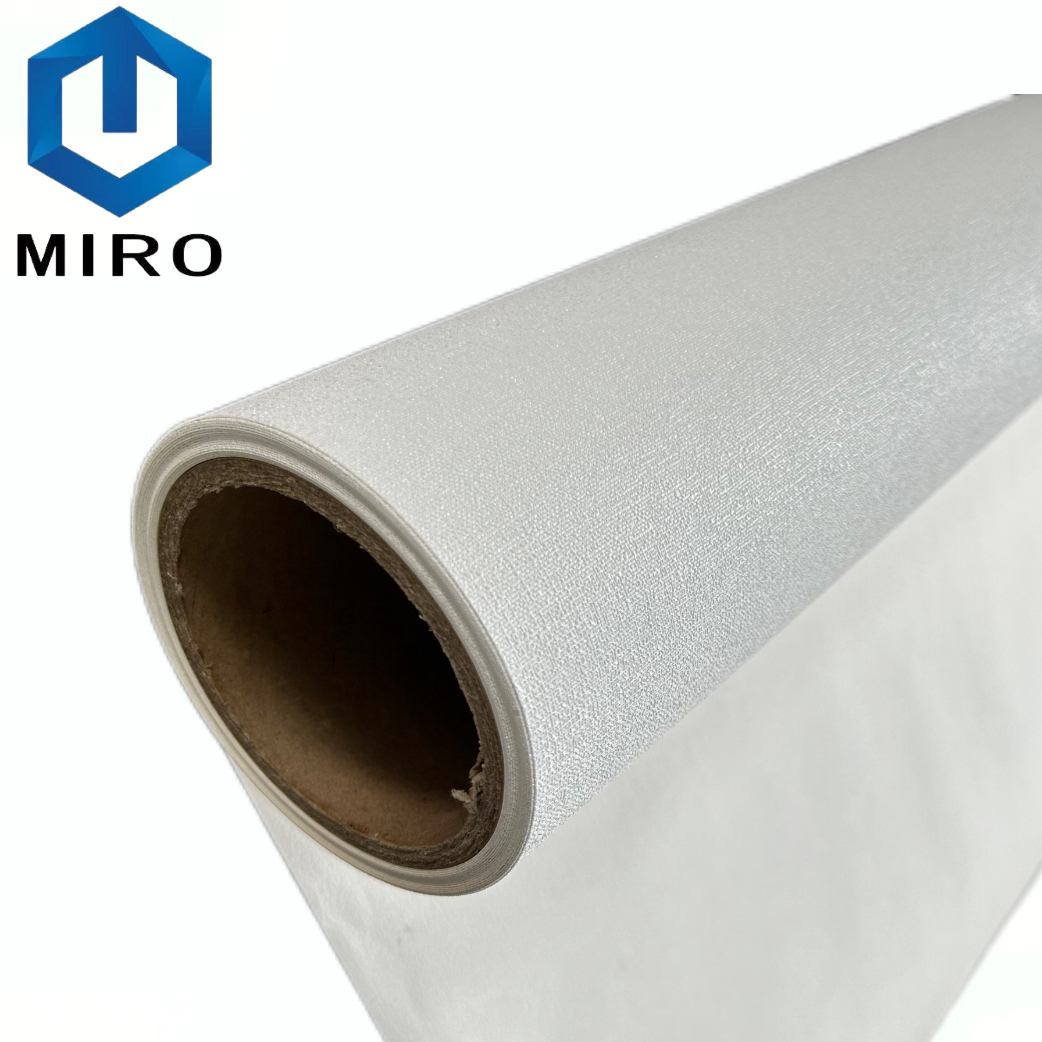
Manufactured through controlled precision coating and thermal curing. Combines a high-tensile non-woven core with a micro-porous, highly cross-linked mineral-reinforced latex face that actively bridges structural wall movement.
Building structures undergo continuous micro-movements due to concrete curing, foundation settlement, seismic vibration, and seasonal thermal expansion/contraction. When a gypsum wallboard seam or plaster substrate develops a micro-crack, the stress is directly transmitted to the surface finish.
Standard liquid latex paint dries into a thin elastomeric film ranging from 40 to 80 microns in dry film thickness (DFT). Because this film is continuously adhered to the rigid wall face without structural reinforcement, its elongation capacity is minimal. Once a shear force exceeds the ultimate tensile strength of the thin paint film, the coating ruptures, displaying visible hair-line cracks that require cutting, re-puttying, and complete wall repaint.
Pre-finished latex-paint wallcovering incorporates a dimensionally stable, synthetic/cellulose non-woven textile backing ranging from 130 to 200 g/m². This engineered backing acts as a continuous structural membrane. When stress concentrates at a wall fissure, the high tensile strength of the non-woven matrix distributes the stress multi-directionally across a broader surface area, effectively bridging the crack beneath without telegraphing structural flaws to the finished decorative face.
Mechanical Stress Principle: By upgrading from a pure liquid film (0.05 mm thick) to a structurally reinforced composite sheet (0.40–0.60 mm thick), the mechanical energy required to rupture the surface decorative coating increases by over 1,200%.
Indoor dampness and toxic mold growth (such asAspergillus nigerorStachybotrys chartarum) represent significant building liability risks. Traditional interior wall coverings face a dual dilemma: impermeability causes moisture trapping, while high absorption leads to water damage and staining.
When high humidity occurs inside a room, or when moisture migrates through exterior masonry walls toward the interior, low-permeability latex paint coats form a moisture barrier. Condensed water collects directly behind the paint skin, causing hydrostatic pressure that results in blistering, peeling, and ideal localized growth conditions for fungal spores.
High-grade latex-paint wallcovering utilizes a specialized formulation blending water-based cross-linking latex polymers with micro-fine mineral particles (such as shell powder, calcium carbonate, and natural silica). This creates a tortuous network of microscopic vapor channels throughout the coating layer.
Because the non-woven backing and mineral-filled face both exhibit balanced water vapor diffusion resistance values, humidity moves freely through the material layer into the ambient air, preventing moisture condensation within the wall boundary layer. When combined with inorganic anti-fungal additives, the material achieves a Grade 0 mold resistance rating under standardized testing protocols.
In modern commercial construction and real estate renovation, labor scarcity and project timeline delays represent severe financial liabilities. Traditional coating methods require extended multi-day schedules that increase indirect overhead costs.
Green building certification schemes (such as LEED v4.1 and WELL Building Standard) enforce stringent standards for Volatile Organic Compound (VOC) emissions, formaldehydes, and heavy metals in interior finishes.
When liquid paint cures on site, coalescing solvents, plasticizers, and preservatives evaporate into the closed indoor air environment over 72 hours or longer. Even low-VOC paints contribute to elevated total VOC (TVOC) levels during the drying window, delaying building occupancy.
Pre-finished latex-paint wallcovering completes its chemical cross-linking and thermal drying cycle inside a controlled factory environment equipped with catalytic thermal oxidizers. When rolled out on site, the material releases zero solvent fumes or formaldehyde, permitting immediate occupancy without specialized indoor air flushing or temporary ventilation setups.
The hydrophobic mineral surface of latex-paint wallcovering prevents aqueous liquids, coffee, oil stains, and ink marks from penetrating into the core structure. Maintenance teams can clean the surface using standard neutral detergent solutions without burnishing the finish or wearing down the surface color.
Environmental Compliance Note: Pure water-based latex formulations combined with inert inorganic mineral fillers eliminate plasticizer migration issues commonly associated with traditional PVC or vinyl wallcoverings, eliminating phthalate toxicity concerns completely.
Latex-paint wallcovering incorporates a flexible non-woven base layered with pre-cured water-based latex resin and mineral fillers, providing physical resistance against wall cracks that traditional liquid paint cannot match.
Because the coating is pre-applied in a factory environment, site workers only need to perform roll adhesive installation without waiting for multiple liquid coats to dry, eliminating days of drying time.
Yes, the pre-cured latex layer provides a high-density, hydrophobic surface that allows common household stains and dirt to be wiped clean with a damp cloth without damaging the finish.
It is highly suitable. The breathable micro-porous structure permits moisture vapor to pass through, preventing trapped dampness and inhibiting mold growth on wall surfaces.



+86-21-68881570

info@mirowallcovering.com

A207 No.2 Building NO.555 Lansong PD Pudong District 200137, Shanghai China
© Shanghai MIRO Import and Export Co., Ltd. All Rights Reserved. Custom Eco-Friendly Sustainable Wallpaper Manufacturersprivacy
